



Soldering Fault Detection
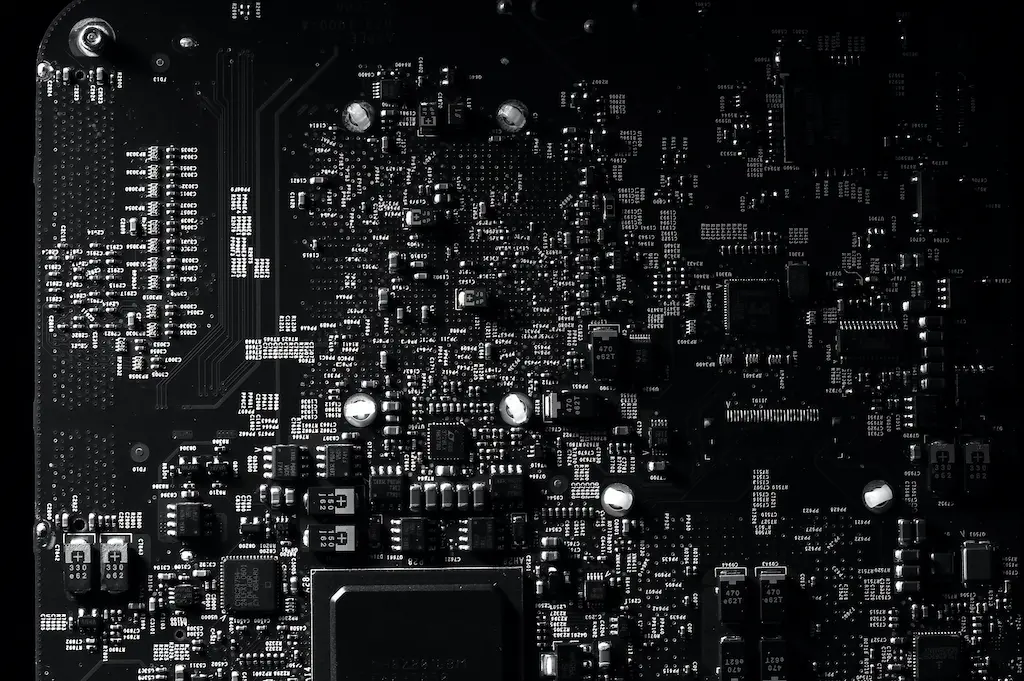
Identifying faults on images of solderings with a high level of accuracy, using state-of-the art AI algorithms.
The Challenge
Detecting faults on images of solderings is a challenging task that requires a high level of precision and accuracy. The complexity of the soldering process, combined with the variety of potential defects that can occur, make it difficult to detect faults with traditional methods. Moreover, small changes in lighting, orientation, or surface reflection can greatly impact the quality of the image, making it harder for human inspectors to identify faults.
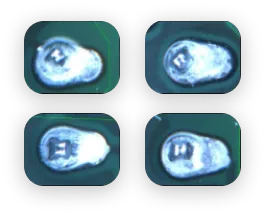
Good Solderings
Properly executed solder joints with correct amount of solder and proper wetting
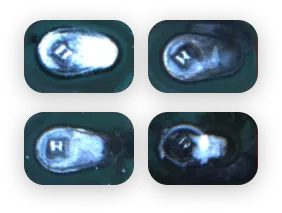
Burnt Solderings
Solder joints that have been exposed to excessive heat, causing discoloration and potential damage
Research & Development
Throughout the project, we identified three primary types of faults. To determine the most effective approach for identifying which type the individual solderings belong to, we tested various AI algorithms, including CNN-based classification, anomaly detection, semantic segmentation, and unsupervised clustering. Notably, unsupervised solutions proved useful in identifying previously unnoticed fault groups in addition to the previous ones.
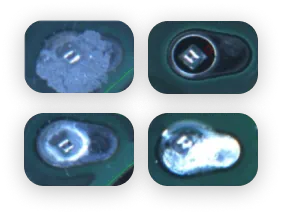
Low Paste Solderings
Solder joints with insufficient solder paste, leading to weak connections
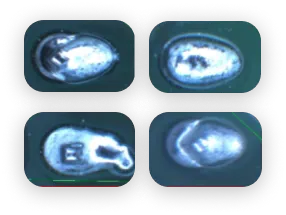
Blob Solderings
Solder joints with excessive solder, forming large blobs that may cause short circuits
Results
Fault detection accuracy of the Artillence AI detector outperforms the current computer vision (CV) and operator detection. Our detector correctly rejects faulty solderings that were accepted by other solutions, and correctly accepts good solderings that were incorrectly rejected by other solutions. The first image array shows that the Artillence detector blocks many truly bad solder joints which were let through by the CV and operator screening. The last array shows that many good solder joints are screened out by the current system, which should be let through.
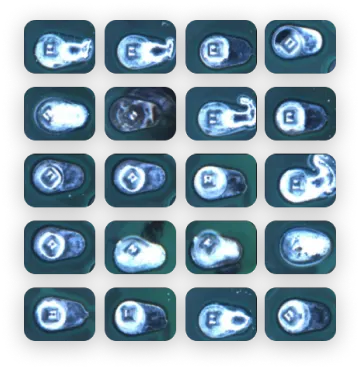
False Negatives
Our detector correctly rejects faulty solderings that were accepted by other solutions
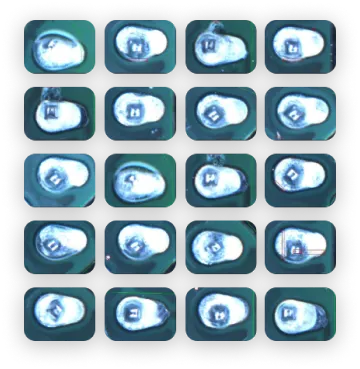
False Positives
Our detector correctly accepts good solderings that were incorrectly rejected by other solutions
Custom Solutions
For instances where no current camera solution is available, we are able to design and implement custom solutions. For demo purposes, we developed a custom built optical inspection cell that uses a Keyence 64MP camera, and Artillence's advanced AI processor for detecting soldering faults during manufacturing.
Have a similar
project in mind?
From design to development, we cover the full range of services for bringing your business into the digital world.
 Get in touch